Sunday, September 20, 2026

UK truck deaths: How Vietnam is still a hotbed of people traffickers

Three years after Al Jazeera uncovered Vietnamese human trafficking practices to the UK, the business is still going strong.

by David Harrison on 28 Oct 2019.

UK police have charged the truck's 25-year-old driver with 39 counts of manslaughter [Hannah McKey/Reuters]
It was a terrifying way to die. The grim discovery of 39 people found frozen to death inside a container at the back of a truck in southern England earlier this month is a stark reminder of the risks people will take in search of a better life.

Police initially believed all the dead were Chinese citizens but more than 20 Vietnamese families, almost all from the same region, have since expressed fears that their loved ones were among the victims. Some say almost all of the 39 victims were Vietnamese.

British police have charged the truck's 25-year-old driver with 39 counts of manslaughter.

The regular and highly dangerous smuggling of people from Vietnam to the United Kingdom was revealed in a 2016 Al Jazeera documentary.

Britain's Modern Slave Trade revealed that Nghe An province - where families held a vigil for the truck victims last week - is a hotbed of people traffickers.

In one of Vietnam's poorest regions, criminal gangs often exploit young people who are desperate to go to Western Europe and send money back to their families.

Our undercover operatives in Vietnam, posing as a young couple who wanted to work in the UK, met a people-trafficker in Vinh City. She calmly assured them that she could arrange for the pair to go to England for $32,000. 

The people-trafficker in Vinh City told our undercover reporters that her contacts would arrange for the couple to fly from Hanoi to Russia where they would pretend to be foreign students or join a tour group.

From Russia, they would then be driven to Europe and on to the UK.

"I will arrange for you to get to Russia, then take a car to Poland, Germany and then France. Once in France, I will pick you up to go to England. I assure you, it's really safe," the trafficker said.

She calmly assured them that the journey would be easy and the whole process could take just a few weeks.


But the reality is that the weeks-long journey is fraught with danger. Physical and sexual abuse is common. Some make it safely to England, find jobs and are able to send money home. But many others are forced into modern-day slavery when they reach the UK.

The people-trafficker said she had a contact there who could offer our female undercover reporter a job in a nail salon.

The investigation revealed many Vietnamese women smuggled into the UK manage to find work in nail salons but some are made to work long hours for little or no pay - and are forced into prostitution in the evening.

As part of our investigation, another undercover Vietnamese reporter started working for no pay in a nail salon in Romford, eastern London.

Doused in petrol

Another worker at the nail salon told her she was smuggled into England in a truck.

She said that the truck "passengers" were doused in petrol to confuse the sniffer dogs at Channel ports, and they were told to wear adult-sized nappies as there was no break during the journey.

The investigation also revealed that many nail bars were run by criminal gangs who also operated cannabis farms generating millions of pounds a year. Vietnamese men were often put to work at these cannabis farms, unaware of the horrendous conditions they would be facing.

Our reporter expressed an interest in working at a cannabis farm and was put in touch with a Vietnamese teenager who was just 17, and looked after a "farm" in Ilford, eastern London.

Eventually, the reporter persuaded the cannabis "gardener" to show her his place of work. The "farm" was, in fact, an ordinary-looking suburban terraced house. Inside, almost every square inch was covered with cannabis plants.

The young "gardener" explained how cables are cut so criminals can steal the huge amount of electricity required to grow the plants.

He also explained how he was unable to leave the house, spoke no English, had his passport confiscated, slept on a mattress under the stairs and was brought food late at night by a member of the gang. He said he suffered from loneliness and depression.

"Staying in the house all the time is like being in prison," he said.

His dream was that one day he would make enough money to leave the cannabis "farm" and send money home to his family but he admitted the money he had been promised had not materialised.

The 39 deaths in the truck provide chilling evidence that the trafficking of people from Vietnam and other Asian countries continues.


ABOUT THE AUTHOR: David Harrison is a multi-award-winning British journalist based in London.

- AL JAZEERA NEWS
-https://www.aljazeera.com/blogs/europe/2019/10/uk-lorry-deaths-vietnam-hotbed-people-traffickers-191028074312098.html

MACC exposes 'blatant' smuggling at Thai-M’sian border, police say probe underway

Annabelle Lee & Hariz Mohd; Published: 18 Oct 2019

  • Updated with Bukit Aman’s response that officers implicated in the videos have been identified and taken action upon

Courtesy: worldofbuzz.com

The MACC unveiled a series of videos today which depicted smuggling activities happening across the Thai-Malaysian border in Padang Besar, Perlis.

The clips, which the anti-corruption agency said were handed to them recently, dated from 2017 to May this year.

They showed how enforcement officers would stand around or be occupied on their mobile phones as smugglers carried sacks of goods across the border in plain sight.

It also showed officers being approached by smugglers before they commenced smuggling activities.

In an immediate response, IGP Abdul Hamid Bador told Malaysiakini that Bukit Aman has since identified and taken action on the border security officers implicated in the clips. 

According to MACC’s analysis, smuggling was most rampant between 6am and 9am when enforcement officers changed shifts.

Among the things it believed was being brought illegally across the border were ketum leaves, petrol, fertiliser, flour, cooking oil and sundry items which were cheaper in Malaysia than in Thailand.

Addressing the press conference after playing the clips, MACC chief Latheefa Koya said that the videos showed “blatant” smuggling at the border and did not discount the possibility of more serious transborder crimes like human and drug trafficking.

The agency has since informed the police about its discovery.

“We have handed all video clips to the police. We will work with the IGP (Abdul Hamid) to take the necessary action.

“[...] (And) once we get the details from the police, we will take the necessary action (that is) within our jurisdiction.

“Of course, the police on their side will have to take the necessary action to step up and tighten the borders, which would include rotations, changing and everything else that we need to do,” she said.

“We believe the data we received also involves the Immigration Department, Customs Department and the National Security Council (MKN),” Latheefa added.

Police probe underway

When contacted, Abdul Hamid said that the police had initiated a probe into the clips since receiving them late last month, and was working closely with the MACC and MKN on the matter.

He added that the improvements had been made to the police’s standard operating procedures (SOPs) for those stationed at national borders and entry points.

Smugglers have also been arrested.

"Since the past four to five months, General Operations Force (PGA) officers at the borders had recorded many successes in crippling smuggling syndicates that were responsible in trafficking all sorts of contrabands, illicit cigarettes, drugs, exotic animals, firearms, immigrants.

"They also arrested smugglers who tried to give them money (in exchange for allowing their activities).

"Their (officers’) awareness to carry out their duties with full integrity had been showing more and more. (And) with the latest standing orders on their duty SOPs, I am confident that cases of leakages at our borders can be decreased drastically,” he said.


- Mkini
- https://www.malaysiakini.com/news/496400

Thai policeman arrested as key suspect in human trafficking of Rohingya

Published on December 31, 2019, by Greeley Pulitze

Police have arrested a man who they believe has trafficked at least 200 Rohingya refugees into Thailand on their way to Malaysia.

56-year-old Charin Chuenchom was arrested over the weekend at a house in Ratchaburi, east of Bangkok. Chanin consequently confessed and was handed over to authorities for prosecution

The Rohingya are a stateless, mainly Muslim ethnic group living in Myanmar’s Rakhine State. They are not permitted to hold Burmese citizenship and have faced historical persecution culminating in the August 2017 attacks on them by the Burmese army (Tatmadaw). There were an estimated 1 million Rohingya in Myanmar before the 2016–17 crisis in which many fled, many by sea and others as refugees crossing the northern border into Bangladesh.

Thailand does not recognise Rohingya as refugees and in the past has arrested, detained and deported them back to Myanmar.

In 2013 the UN described the Rohingya as one of the most persecuted minorities in the world, comparing their conditions to apartheid and accusing the Tatmadaw of “genocide”.

Police believe Chanin was a key player in a human trafficking gang, including a former railway policeman, illegally moving Rohingya people out of Myanmar through Thailand to Malaysia. The Bangkok Post reports that they charged each migrant 12,000 baht for ‘safe’ passage to Malaysia.

“We believe the gang have smuggled Rohingya people into Thailand more than 20 times, with 10-15 people each time, and collected more than 4 million baht,” police told Bangkok Post.

Authorities arrested 14 Rohingya migrants and two Thai smugglers on a train in Nakhon Si Thammarat in January last year. They suspect Chanin used stolen identities to buy their train tickets. He’s been charged with smuggling migrants and human trafficking.

The train was headed for the Thai-Malaysian border. The migrants were extremely hungry as they had no food and only a little drinking water.

SOURCE: Chiang Rai Times | Bangkok Post
- The Thaiger
- https://thethaiger.com/hot-news/crime/thai-policeman-arrested-as-key-suspect-in-human-trafficking-of-rohingya

Police believe attack on Padang Besar border post retaliatory - IGP


Bernama; Published on October 31, 2019

The police believe the attack against the General Operations Force (GOF) guard post in Perlis, on Monday, was due to revenge, as cross-border criminals now found it difficult to smuggle goods out of the country.

Inspector-General of Police Abdul Hamid Bador said, however, the GOF personnel at the border were unfazed by such acts of intimidation.

“We will not tolerate them (smugglers) and I believe they will use firearms after this because it is difficult to smuggle.

"They did not shoot at people but shot the GOF guard post as a warning, as they were not allowed to smuggle," he said during a press conference in Bukit Aman.

Abdul Hamid said to improve enforcement at the border, the GOF should be supplied with a new Armoured Personnel Carrier (APC) to replace the current one which was 42 years old.

"I have informed the Home Ministry for the police to be supplied with a new APC so that they can safely patrol the country's border," he said.

Abdul Hamid said the GOF and members of the Special Branch had already consulted with Thai authorities to conduct an investigation and identify the suspects.

"Thai authorities have also assured that they would tighten security at the border areas," he said.

On Monday, the GOF guard post in Padang Besar was attacked with firecrackers at about 11.20 am and 12.40 pm, causing one of the windows to break.

- Bernama
- Mkini
- https://www.malaysiakini.com/news/498003

The Silver Linings of the Border Between Perak, Malaysia and Yala Province, Thailand

Perak Darul Takzim, Malaysia, is considered the second richest state in Malaysia after Selangor Darul Ehsan, according to the Munich Personal RePEc Archive (MPRA) Report that was published in 2014. Perak also shares a common land border that stretches from the far end reaches in Kuala Perlis, Perlis, to Pengkalan Kubur in Kelantan. Similarly, in Thailand, Yala's border with Malaysia continued from the Western far end reaches in Satun Province and all the way Eastwards ends of Tat Bai in Narathiwat Province. This land border is undulating from the low lands at both the Peninsular Coasts to the inland frosted forested hills of Perak and Yala. Both Perak and Yala only shared one common crossing point. The town in Perak that's nearest to the Malaysian ICQS is Pengkalan Hulu (PH) or historically it's known as 'Kroh' or 'Keroh'. From PH, it's about 7 Kms to Bukit Berapit (BB) and that's the Perak border ICQS post and this post is known as the BBICQS. Walking a short distance of about less than 200 meters from the final police post at BBICQS is the Betong, Yala ICQS. Before getting in the specifics about these border posts, I would like to touch a little bit about the economic history and its development of these existing entities.


According to the MPRA report, these border posts existed to function the Indonesia-Malaysia-Thailand Economic Zone or better known as IMTEZ. The Betong-PH border is one of the most liveliest economic entities and cross-border trade between Northern Perak and Southern Yala brought drastic economic development to Malaysia's Northern Corridor that affected cities like Seberang Perai, Sungei Petani, Gerik, and Baling. However, in this part of Southern Thailand, Betong has grown into a lightweight city of sorts that was once a backwater community for Malayan Communists and a town to launch cross-border attacks in Malaya.

PH is the most Northern town in Perak. PH was once called 'Keroh' or 'Kroh' and to many Malaysians and Thais alike, the history of this area or 'Keroh' is laced with interesting facts. Keroh' was once ruled by the Kingdom of Reman that was under the auspicies of His Royal Majesty the Siamese Kingdom. When the (King or Sultan) of Reman decided to get greedy and raided 'Klian Intan' (now called 'Teluk Intan') for the tin and the surrounding mines. The Sultan of Perak and its people felt besieged by the constant harassment and ill treatment of these so-called Siamese called Remans. And so it seemed the only way to negotiate out of this mess was to talk with the powerful Siam King in 'Krunthep' or Bangkok. Thus, under the 1909 Treaty between Siam, Colonial Britain, and the Sultan of Perak, Hulu Perak (where 'Keroh' or PH is now situated) and Perak, became a British Colonial entity. The Siamese, in exchanged, enhanced Siam with British Protection against the French threats arising from the Khmer region (that today is known as) Vietnam. And so Colonial Britain further rationalized the treaty and extended Westwards into Kedah and Perlis as well.

Today, PH or 'Kroh' is a small backwater town struggling like many small cities in Malaysia. It seemed today, it has become a stop over for many Malaysians wanting to visit Betong, Yala. As stated in the MPRA report, there are major plans to redevelop the region into a bilateral entity to attract travelers and tourists. However, the situation becomes delayed because in the city of Yala (about 2 hours from Betong) there were insurgent bombings. As indicated before, Yala together with Narathiwat and Pattani are major insurgency targets by rebels wanting a freer autonomy or even independence from the Kingdom of Thailand. As the talks are off and on between parties, it seemed from various parties and witnesses that the Thai Islamists (even labelled as PAS by Thai Malay Muslims) are in cahoots with the Thai Buddhist military or even militias to instigate these sort of threats to contain the South and even to give jobs to the military personnel. Having said that many ordinary Thai Malay Muslims and Thai folks (in the South) are frustrated with these politics because their livelihoods are contained and they cannot move forward with their lives and allow their provinces to progress.


On the otherhand, the Thai Southern Government have tried to make inroads by establishing major touristy cities like Dannok, Hatyai, Su'Ngai Kolok, and Betong as major tourist heavens for cross-border Malaysians and travelers alike. Some of these cities do look a bit like Malaysian cities and many crave the delicacies towards Malaysian tastes and even the languages here (despite Thai is the main language) many in these cities speak Malay, Mandarin, Cantonese, Hokkien, and even Teochew. Many of these cities have drawbacks as well, its a major attraction for prostitution for many Malaysians who want to do a quickie across the border, hence, the issue of human trafficking is rife.

Having said that, the city of Betong came into existence in the 60s not because the city just sprung up by itself but because its a major refuge for Malayan Communists who hid deep in the hills and jungles of these parts of Yala province. Piyampit tunnels were just across the Malaysian border that sat just above and between 'Kroh and Baling. The tunnels were impressively dug and akin to those in Vietnam during the Vietnam-French wars - Ho Chi Minh could be impressed by the tunnels.


A major operation gathered pace sometime in the 70s between the Malaysian and Thai governments but unbeknownst to many Thais, those that started the Betong city were actually communist rebels but decided to lay down their arms perhaps for their sake of their families. Many of them are Chinese and they do speak the brand of Cantonese like my parents spoke - typical Guangdong style, slightly incoherent and nonchalantly numbly sort of way.

The Thai Government also encouraged various other ethnic Thais like Khmers from Ihsan (pronounced as ee-San) from the Northeast of Thailand and Barmans (from Western and Northwestern Thailand) to move to the rebellious and delicate South. Hence, the culture become an ordinate between Thai-Malaysian hybrid culture. The food is deliciously Thai with a hint of Malay and Malaysian mix. Halal food prepared by Thai Malays are similar to the many Malay food stalls in Malaysia that sold Thai-Malay food. The Chinese food is slightly different with a touch of a lot of herbs, especially the bitter-sour lemongrass is common in Thai food. And the Thai fish soy sauce is truly salty and pungent  to anyone who finds it repugnant or disgusting. For me, Thai food is deliciously sweet, salty, and stung my taste buds with those little beady bird chilies that perspire all over my face.

White foreigners may not find Betong interesting and perhaps called it a 'boring' town of sorts but they are wrong. Like many Thai towns, the Government is bent on improving its image having more bars and drinking oasis with thumping music ramping the background and Thai women from all over Thailand to attend to these patrons. One thing is for sure, Betong is no longer a backdrop insurgent town rife with ex-commie-rebels wanting to build a new life for their families, but for many Thai law abiding residents, it will be an example of peacefulness and progress.


The PH and Betong ICQS are perhaps one of the most organised ICQS facilties. On the Malaysian side there's a building block just like all the new facilities in the North. The question here that begs my understanding is, is the building block necessary? We are not talking about a simple one level block building but the building seemed like a real entire office block. Just look at the picture below, the building on the left is at least 3 storeys high! On numerous occasions, most of the immigration booths are empty, and there's perhaps one immigration officer only. Moreover, the Customs Department is mostly inactive. The day, I arrived, at the ICQS is a Friday after the Friday prayers at about 3pm. There's just one lady at the immigration booth and she seemed contented playing her game or watching a video on her phone and not even aware I arrived. Suddenly she looked up and saw me, and she quickly scanned my passport and I said "terima kasih, puan." She couldn't be bothered as if I was interrupting her activity.

A quick note about how to get to the BBICQS. Now from PH or 'Kroh', there aren't any public transport. As a matter of fact, this is one of the most expensive places if you don't have your own private transport. There's no Grab or Uber in PH. The only mode is either taxis provided from the bus station or bus terminus at PH right in the middle of the town or illegal tout runners (who are mostly of Malays of Thai nationality). The problem is most times from the Malaysian side, they will not fetch you from PH to Betong in one go. What they would do is drop you at the Malaysian side of the ICQS at Bukit Berapit and then you have to process your passport. After completing the process and on the way out of the Malaysian immigration, there are (so-called) bike runners waiting at the exit of the pedestrian immigration hallway. These runners will bring you all the way to Betong, Thailand  and at the same time even waiting for you to process your passport at the Thai side. Now the problem here is costs. The Malaysian taxi on the first instance (part) charges about RM 12.00 and the Thai runner charges another 100 Baht or another RM 12.00. So that's like RM 24.00. Its the same when you cross from Betong to PH and it can get more expensive because they know you are at their mercy. Minimum is about RM 25.00. The Thai touts can be very ruthless and they traverse between Perak and Jala regularly. I do hope the current Pakatan Government can resolve this instance with the Thai Government, soon.

Lastly, I just want to talk a little bit about surveillance and its not about the current immigration surveillance in these parts but surveillance during the communist era. Nevertheless, just a quick note, the current border programs and surveillance in PH - Betong area is pretty much controlled. Desperate migrants will never use these parts because these areas are too hilly, forested and PH-Betong is quite chilly in the mornings, meaning it does get very frosty at times. Unless you are an insurgent and running away to hide in no man's land, then perhaps these hills are ideal sort of way. But then again, one must be very adventurous and well trained in survival skills to survive these tortuous areas, not to say the least there could be vicious wild animals as well. Having said that I think the Communists during the 50s, 60s, and 70s did not just observe the activities daily on whether the Malaysian or Thai army penetrated their defenses. They did have some sort of technology to assist them and I came across interesting technology at the Betong Museum. According to the Central Intelligence Agency (CIA), one of the best ways to get information is via information from your everyday news channels on tv or radios. Look what I found in the museum, and yes, high end 'NordMende' (German) radios with powerful Shortwaves (SW) and Longwaves (LW) capabilities.


Another interesting fact is that I think the information garnered from the Communists was not via daily observations but I think they do rely on stationary camera traps that were already in place then. That's how I think today animal conservationists rely on camera traps to capture whether certain species of animals in their habitats and to record their existence and their numbers. Those days, if the camera captured soldiers or border patrols reaching their areas were recorded on pictures, they could certainly calculate the distance and whether they should retreat further or organised ambushes. Eastern communists were very creative in their pursuits and not just relied on traditional strategies; just looked at ISIS, they didn't have the know how to create advanced drones, but they relied on crude drone ideals like powering up a man-made plastic or wooden craft, crude enough to fly and become missiles in the midst, if the drones are laced with bombs. Similarly, communists then relied on camera technology to capture the existence of government troops movements and whether they breached certain frontiers. Troops who were not versed with ideals of technologies would disregard them. But these cameras can be readily camouflaged and opposition troops would not be able to distinguish a block of wood from a camera or even a huge mushroom.


Surveillance has always been an important aspect of security. To an untrained eye, surveillance is just a careless dot or coma. But to a trained eye, there's more than that to that dot or coma. Snipers relied on patience, observations, and the understandings of each of the individuals involved in their scheme of observations before they even requested to take actions. Conservationists relied on camera traps not only to capture animals but also to study their behaviour as well. Thus begs the questions whether we need unobtrusive screenings and surveillance but at the same time allow officers to be their normal selves and not dwell in nervous searches which perhaps they do not like as well. However, unobtrusive measures can be duly invasive but if its done professionally and protect nationalities from drugs and other trafficking and smuggling activities, why not. Its still the best way.

The EU plans to test an AI lie detector at border points

By Dani Deahl on 31st October 2018.

Illustration by James Bareham / The Verge

Trials for AI lie detection at border patrol checkpoints are set to begin soon in the EU. The program, called iBorderCtrl, will run for six months at four border crossing points in Hungary, Latvia and Greece with countries outside the European Union, as reported by Gizmodo.

iBorderCtrl is an EU-funded project that uses AI to facilitate faster border crossings for travellers. The system has users fill out an online application and upload some documents, like their passport, before a virtual border guard takes over to ask questions. According to New Scientist, some of these questions include “What’s in your suitcase?” and “If you open the suitcase and show me what is inside, will it confirm that your answers were true?” Travellers will answer while facing a webcam and the system will analyze and rate dozens of micro-gestures.

If iBorderCtrl determines the traveller is telling the truth, then they receive a QR code that will let them pass the border. If there is suspicion the traveller is lying, they’ll have biometric information was taken — including fingerprinting, palm vein reading, and face matching — before being passed to a human agent who will review their information and make an assessment.

The program is still considered highly experimental, and in its current state, will not prevent anyone from crossing over a border. Early testing of a previous iteration only had a 76 per cent success rate, but a member of the iBorderCtrl team told New Scientist that they are “quite confident” that can be raised to 85 per cent.

Even if that goal is reached, it leaves a large amount of room for error. But that’s not entirely surprising as studies have shown that many facial recognition algorithms have significant error rate issues and bias. These systems have also raised flags with civil liberties groups like the ACLU’s Border Litigation Project, who worry they might lead to more widespread surveillance.

The 'Shadowlands' Of Southeast Asia's Illicit Networks: Meth, Dancing Queens And More

September 11, 2018
Ashley Westerman


Hello, Shadowlands
Inside the Meth Fiefdoms, Rebel Hideouts and Bomb-Scarred Party Towns of Southeast Asia
by Patrick Winn
Paperback, 414 pages

Southeast Asia's economy is booming, increasing at an average of 5 per cent per year. Thanks to an expanding consumer market, a young, robust workforce and increasing regional cooperation, it's only expected to grow.

But as it does, so do the region's black markets: drugs, human trafficking, animal trafficking. It's this world of underground organized crime that is the topic of journalist Patrick Winn's new book, "Hello, Shadowlands: Inside the Meth Fiefdoms, Rebel Hideouts and Bomb-Scarred Party Towns of Southeast Asia".

Based in Bangkok, Winn is the Asia correspondent for Public Radio International's The World and has spent a decade trying to understand how crime groups are allowed to thrive in a region where democracy is in retreat.

"When some people hear 'authoritarian rule,' they think squeaky-clean streets and no crime, but that's not the case," Winn tells NPR's Morning Edition.

In the book, Winn argues how and why "authoritarian, capitalist-style" governments are fertile ground for criminal networks to exist. He tells this story through drug fiefdoms in Myanmar that help fuel the world's largest methamphetamine trade, women selling illegal contraceptives in the Philippines and entertainers exported from North Korea to work in state-run restaurants across Southeast Asia — among others.

Winn argues that whether it's pushing hot-pink speed pills, snatching up people's pets to sell into Vietnam's dog meat market or taking up prostitution, people working outside the law "can oftentimes be quite relatable. They are all making rational choices in a rather extreme environment."

The following highlights from the interview are edited and condensed for clarity.

Covid-19 fears force separatists into ceasefire in south Thailand

Bernama on 5th April 2020


Thai-Malaysian border at Wang Prachan, Satun, Thailand. DChan Archives.


CORONAVIRUS | Southern Thailand's most powerful armed group, the Barisan Revolusi Nasional (BRN), has announced a ceasefire to enable humanitarian and medical access into areas affected by Covid-19 outbreak in the province.

In a statement, dated April 3, the shadowy armed group said it is taking measures “to cease all activities" effective Friday (April 3), for as long as "BRN is not attacked by Thai government personnel”.

"In order to create a safer and more suitable environment for the people of Patani for health care agencies and other organisations tasked with preventing and containing the outbreak of coronavirus, BRN is now taking measures to cease all activities," said the statement which was issued by the group's central secretariat.

According to BRN, the pandemic, which has claimed several lives in the southern province is the "principal enemy of the human race" and the group reiterated its commitment to cooperate in overcoming the disease.


"As a defender of the Patani Nation, BRN calls on the entire Patani Nation to strive to protect each other and their families as much as possible and to pray to the creator," said the statement, adding that it also has to preserve "our nation and descendants" from being infected by the virus.


The group said the current climate of anxiety and hardship faced by the people in Pattani is further aggravated by increasing military operations, which are "inhumane and senseless."

Thailand's Centre for Covid-19 Situation Administration (CCSA) has reported that 20 people in the Kingdom have died from the virus and 2,067 people infected.

Chan-O-Chan, Prime Minister of Thailand. Malaysiakini File Photos.

In a televised address, Thailand Prime Minister Prayut Chan-o-cha (above) announced a nationwide curfew from 10pm until 4am effective April 3 in a bid to contain the virus which has wreaked havoc throughout the globe.

Facilitated by Malaysia, BRN and Thailand's peace dialogue panel had held historic meetings in Kuala Lumpur in January and March this year in the latest bid to forge peace in the violence-wracked provinces of Patani, Yala, Narathiwat and Songkla.

As the most influential armed group in southern Thailand, BRN has been blamed by Thai authorities for most of the armed-conflict related violence that happened in the southern provinces.

The armed conflict in southern Thailand, which borders northern Malaysia, has raged since 2004, claiming more than 7,000 lives.

- Bernama
- Mkini
https://www.malaysiakini.com/news/518908

MMZ enforcement not optimum due to lack of coordination - audit report


Bernama: Published 14 Jul 2020

The lack of coordination between enforcement departments and agencies, in terms of sharing of information, and insufficient assets are among the reasons why enforcement operations in the Malaysian Maritime Zone (MMZ) have not reached optimum efficiency.

The Auditor-General’s Report 2018 Series 3 stated that apart from damaged assets, the vast MMZ area also made it difficult for security and enforcement activities to be carried out.

“This is why activities like the smuggling of goods, encroachment and smuggling of undocumented migrants and incursions by fishermen are still happening in the ZMM,” said the report.

It added that damage to 34.6 percent of the ships and boats also affected the efficiency and effectiveness of operations in ZMM, while 11.7 percent of vessels or boats owned by the Malaysian Maritime Enforcement Agency (MMEA), Royal Malaysia Police Marine Team and Department of Fisheries (DOF) were also damaged and have not undergone maintenance due to insufficient allocation.

The report further stated that there was no Malaysian Maritime Sea Surveillance System in the waters off the east coast of Peninsular Malaysia, Sarawak and east coast of Sabah to monitor any encroachment and smuggling activities in the zone.

It also said that there was no centralised collection and coordination of information among all the departments and agencies for enforcement purposes.

The report also revealed that Chinese Coast Guard vessels were detected to have encroached into the country’s waters 89 times from 2016 to 2019 and their presence had been identified to be related to claims over the South China Sea, especially the Beting Patinggi Ali area (BPA).

“Five diplomatic protest notes have been issued to China for trespassing into Malaysian waters following 29 reports lodged by the Royal Malaysian Navy (RMN) from 2018 to 2019,” the report added.

Thus, the report stated that the intrusion by China, especially in the BPA, was a serious threat to the sovereignty and security of the MMZ.

“Although the RMN has shown, through its presence in the area, that it will protect the sovereignty of the waters off BPA, it is not an enforcement agency.

“Accordingly, the MMEA should be at the BPA area at all times to carry out enforcement and give the Malaysian government an advantage should there be any claims by China at the international level,” the report suggested.

- Bernama
- Malaysiakini
- https://www.malaysiakini.com/news/534357

Police going after errant officers


CID Chief Datuk Huzir Mohamed

By Farik Zolkepli on Thursday, 11 Jun 2020

KUALA LUMPUR: Bukit Aman is zeroing in on enforcement personnel who colluded with human smuggling syndicates following the arrests of 371 syndicate members during phase three of Ops Benteng, said Comm Datuk Huzir Mohamed (pic).

The Bukit Aman CID director said police have identified enforcement personnel involved with the human smugglers.

“We arrested 371 syndicate members comprising agents, transporters and those who prepared transit houses for illegal immigrants during the operation held from June 4 to June 7.

“The syndicate members were responsible for arranging the entry of illegal immigrants, especially those from Indonesia, Myanmar and Bangladesh, through land and sea, ” he told a press conference in Bukit Aman yesterday.


The police had started busting human trafficking syndicates since phase one of Ops Benteng from Jan 1 to March 17, before continuing in phase two from March 18 to June 3 during the movement control order (MCO) period, he added.“During phase two, the IGP instructed the CID to form a task force to curb the entry of illegal immigrants into the country, thus preventing the spread of the Covid-19 virus.

“The IGP had instructed as such, as intelligence indicated that more foreigners will attempt to return to Malaysia illegally after the Hari Raya Aidilfitiri celebrations, ” Comm Huzir said.

Since Jan 1,547 syndicate members, including 41 women aged between 20 and 70, were arrested, he added.

“Those detained were Malaysians, Indonesians, Bangladeshi, Myanmar nationals and Filipinos.

“We will step up our operations against human smuggling activities to cut the chain of the syndicate’s network.

“Our efforts are in line with the instructions from Prime Minister Tan Sri Muhyiddin Yassin for the authorities to tighten security at the country’s borders nationwide, ” said Comm Huzir.

Comm Huzir said the syndicate members were arrested under Sosma and investigated for joining organised crime syndicates.

He urged those with information on human smuggling activities to contact the Bukit Aman CID’s Anti-Trafficking in Persons and Anti-Smuggling of Migrants (Atipsom) unit (D3) at 0326101510 or the nearest police station.

On another matter, 26,366 people were detained for various violations since the start of the MCO, Comm Huzir said, adding that 78% of them, who were detained between March 18 and June 9 have been charged in court.

“Compounds were also issued to 10,875 people, including 3,098 issued at police stations and 1,762 compounds in the field, ” he said.

The Star
https://www.thestar.com.my/news/nation/2020/06/11/police-going-after-errant-officers 

Corruption At the Malaysian Immigration Department


This post and the comments below are dedicated to the extent of corruption by Malaysian Immigration Officers. The gist of this post and comments are not to humiliate the Malaysian Immigration Department. The purpose of this post is to collect all the articles available on the corruptions and syndicates managing to corrupt government immigration officers on corruption. All those who love to travel and have any say about corruption in Malaysia is very welcome to say something in the comments column. Your views will not be judged but as the administrator of this blog, I will monitor your opinions. Please, this blog does not accept hedonistic, racialistic, and religious discriminatory comments. Any comments not related and offensive will be deleted, and you will not be entertained. 

'Bad apples' in enforcement agencies need to be thrown away

Published on 10 Dec 2020

A spate of crimes involving enforcement officers has prompted several public figures to urge enforcement agencies to improve their training to prevent the increase in the number of "bad apples". The latest probe was on two 30-something policemen, each carrying the rank of lance corporal and constable, who were said to have forced a couple to have sex while they recorded their act on their mobile phones on Dec 4. In October, the MACC arrested four senior police officers who were among 10 individuals for their involvement with a Macau syndicate, widely reported by the media. Following that, Inspector-General of Police Abdul Hamid Bador, who repeatedly warned his officers against abuse of power, announced the formation of a special committee to screen police personnel qualified to work in certain departments. Police divisions such as the Criminal Investigation Department (CID), Narcotics CID, and D7, which deals with vice, gambling and secret societies, were undergoing major revamps. Last month, the MACC nabbed 28 immigration officers in cahoots with the "stamping facility" syndicates at KLIA. A low-rank officer was found to have luxury vehicles such as Phantom Rolls Royce, Mustang and Audi. These were among the recent cases reported by the media. Several public figures interviewed by Malaysiakini shared their thoughts on crimes involving enforcement officers.

Former IGP Musa Hassan

When police officers commit crimes, it shows that their discipline level had declined, and they have no respect for the law. If no standard operating procedure (SOP) was followed, there would bound to be corruption and abuse of power. In general, seven actions should be taken:

a) Stern action against officers and personnel for breaking the discipline, disregarding the Inspector-General of Police's Standing Order (PTKPN), and involving with corruption.

b) Stern action against supervisors or heads for failing to monitor and check their men and failing to take action against them for breaching the SOP.

c) Integrity and Standard Compliance Department and the MACC have to work together to monitor (possible wrongdoings).

d) Training during the service must be frequent for the officers and personnel to sharpen their skills, be aware of the standing orders and the SOP.

e) New recruits must be firmly instilled with disciplines to ensure that they respect the law and SOP.

f) Those who found to have a discipline problem need to undergo intensive retraining.

Alliance For Safety Community chairperson Lee Lam Thye

It is time for all law agencies to find effective ways to enhance integrity. It's something that cannot be compromised. Integrity covers the whole subject of work ethics. Every government department has its own integrity committee, but the question is, are they effective? Why, despite having the integrity committee in each department, we still see a lack of integrity among officers? The government must thoroughly review the integrity committees. Without integrity, there are bound to be problems such as corruption and abuse of power.

Crime analyst Kamal Affendi

If the public is worried about wrongdoing involving enforcement officers, they should also feel relief as the suspects have been arrested. It's the government's policy not to cover-up the abuse of power, and the enforcement agencies don't cover up their investigations. Hence, we can read reports about "bad apples". When some people start their jobs, they only have the knowledge of the system, but as they work their way up, this is where they know the weakness of the system and exploit it. When there is an opportunity in front of their eyes, surely it would become a motivation and desire to commit the crime. An immediate post-mortem must be conducted at all levels to identify the weak spots. We must not be satisfied when the suspects are punished. During the court case, we would be able to indicate the "weak spots". Then, we must seek to fix the weaknesses and close the exploited areas.  Kuala Lumpur Crime Prevention Practitioner Association exco Saiful Hamiruzzaman Mohd Hazir. Starting from now, the enrolment to join enforcement agencies must consider the mental health aspect of applicants. For so long, the agencies were focusing on the physical attributes of applicants. Weak mental strength will only lead to poor integrity, which opens up to the abuse of power. Secondly, victims and the public must know their rights when approached by enforcement officers and what they should do.

KLCPPA exco Bok Siew Mun

The police should implement the usage of body camera on their personnel while on duty. The applicants should undergo a thorough background check before joining the force and periodic checks thereafter. However, the public should know that only small police numbers are being investigated, not the whole police force. The police, on the whole, have done a lot to ensure our safety. Hence, we should not let a few rotten eggs tarnish the whole enforcement. On the other hand, severe actions should be taken if they are proven guilty. Crime analyst Shahul Hamid Abdul Rahim. The respective agencies have to review their work SOP to ensure that it's still relevant, and job rotation among officers and personnel must be regularly made. The standard of training and courses have declined. Many departments conduct training just for the sake of it. There's no proper training to encourage the participants to work with integrity and as a team. As for the enrolment of new recruits, every government agency has to review their modules. Perhaps, there are modules which do not achieve the desired standard.

- Mkini

- https://www.malaysiakini.com/news/554591

๐Ÿ‡ฐ๐Ÿ‡ท๐Ÿ‡จ๐Ÿ‡ณ๐Ÿ‡ฐ๐Ÿ‡ญ Misplaced Blame and Missed Accountability: Southeast Asia Is Not a Monolith

Recent headlines have spotlighted the tragic death of a South Korean student in Cambodia, allegedly tortured in a scam compound near Bokor Mountain. The incident, alongside the repatriation of dozens of South Koreans detained or exploited in Cambodian scam centres, has understandably triggered alarm in Seoul. President Lee Jae Myung has called for a tougher crackdown on transnational scams targeting Korean nationals, and South Korea has even sought UN cooperation to address the growing threat of human trafficking linked to online fraud.

But the narrative now circulating—that Southeast Asia is broadly unsafe for South Koreans—is dangerously reductive.

๐Ÿ” Southeast Asia ≠ Cambodia Alone

Southeast Asia comprises eleven nations, each with distinct governance, security frameworks, and bilateral ties with Korea. To conflate the entire region with Cambodia’s criminal underbelly is to ignore the diversity and complexity of ASEAN. Many South Koreans in the region are not tourists but workers, students, and entrepreneurs seeking opportunity—not leisure.

๐Ÿงญ The China Factor: Transnational Crime Needs Transnational Accountability

What’s missing from the conversation is the role of Chinese criminal syndicates operating across Southeast Asia. Scam compounds in Cambodia, Myanmar, and Laos have repeatedly been linked to Chinese nationals and networks. Beijing must take proactive responsibility—not just reactive diplomacy—before tragedies escalate further.

Let us not forget the 2011 Mekong River massacre, where 13 Chinese sailors were murdered by drug traffickers operating in Myanmar. That incident, underpinned by Chinese cartel influence, prompted a rare military response from China. But why wait for another bloodbath?

๐Ÿ›ก️ Call to Action

China should lead regional efforts to dismantle scam networks seeded by its own citizens. South Korea must continue to differentiate between rogue zones and legitimate partners in Southeast Asia. And media outlets must resist the temptation to paint the region with a single, fearful brush.

Southeast Asia deserves nuanced engagement—not blanket avoidance.

Malaysia approves 50km border wall facing Narathiwat

B11.5bn equivalent budget approved for wall's construction

A border wall separates Thailand's Betong district in Yala and Malaysia's Perak state. A similar barrier will soon be built between Narathiwat and Kelantan state. (Photo: 4th Army Region)

The Malaysian government has approved the construction of a wall in Kelantan state along the border with Thailand fronting Narathiwat, and allocated a budget 1.5 billion ringgit (11.5 billion baht) for its implementation. 

Kelantan state police chief Mohd Yusoff Manat announced the decision and budget allocation on Tuesday, the New Straits Times reported.

"The allocation has been approved for the construction of the wall, and the chief secretary to the government, Tan Sri Shamsul Azri Abu Bakar, has conducted a site visit to the border," he said in the report. 

The decision is a major victory for the Malaysian state, which has long sought the construction of a barrier along the border with Thailand's Narathiwat province, as the two countries battle against smuggling and other cross-border crime.

Malaysia has previously built crime-stopper walls along some sectors of the border with southern Thailand. This will be the first in Kelantan. It is also intended to prevent flooding from the Golok River, which separates the two countries in that sector.

The state police chief said the first section of wall in Kelantan would be built between Tumpat and Tenah Merah, Bernama news agency reported. The project was now in the tendering process, he said. It would be about 50 kilometres long.

https://www.bangkokpost.com/world/3124268/malaysia-approves-50km-border-wall-facing-narathiwat.

Malaysia’s Position on Article 5.1: Strategic Autonomy Over Uncritical Alignment

Article 5.1 No way! 

Article 5.1 may assert that Malaysia is obliged to replicate any trade restrictions—tariffs, quotas, or prohibitions—imposed by the United States under the guise of economic or national security. But let us be unequivocal: Malaysia is not a subordinate actor. We are a sovereign trading nation with our own strategic calculus, regional partnerships, and economic imperatives.

China and Russia are not adversaries—they are integral partners. Malaysian consumer markets are deeply embedded within Chinese supply chains, particularly in foodstuffs, household goods, and electronics. To mirror U.S. trade measures wholesale would be economically unsound and politically destabilising. The PH+BN coalition is acutely aware of this. Enforcing Article 5.1 without nuance risks fracturing domestic coalitions and alienating key minority communities whose consumption patterns are closely tied to imports from Hong Kong and mainland China.

Furthermore, Malaysia is actively deepening its engagement with BRICS nations. YAB DSAI’s invitation to the Presidents of Brazil and South Africa for bilateral trade summits is not symbolic—it is strategic. We are broadening our trade architecture, not constricting it. To jeopardise these relationships in pursuit of rigid alignment with U.S. protectionism would be a grave miscalculation.

Malaysia must interpret Article 5.1 through a lens of pragmatism and national interest. We cannot, and will not, abide blindly by language that undermines our regional stability or economic growth. Our trajectory demands diversified partnerships—across agriculture, textiles, engineering, and beyond. Compliance must be conditional, measured, and always aligned with Malaysia’s sovereign priorities.

Time Is Running Out: Why M. Indira Gandhi Must Act Swiftly to Locate Her Daughter

By Determined Sarawakian 

Seventeen years have elapsed since Prasana Diksa was taken from her mother, M. Indira Gandhi, at merely eleven months of age. Despite a landmark ruling by Malaysia’s Federal Court in 2018—which declared the child’s unilateral conversion to Islam invalid and reaffirmed Indira’s full custodial rights—Prasana remains missing. The father, who absconded with her in defiance of court orders, has yet to be located or held accountable. Law enforcement has failed to execute the arrest warrant. The state has failed to reunite a mother with her child.

But time is no longer a luxury Indira can afford.

⏳ The Legal Clock Is Ticking

In fewer than four years, Prasana will reach the age of 21—the age of majority under Malaysian law. At that point, she will possess full legal autonomy to determine her religion, residence, and familial affiliations. Should she emerge publicly and declare herself a Muslim, or worse, renounce her mother’s custodial claim, the legal and emotional stakes of this case will shift dramatically.

The Federal Court’s ruling will remain a powerful precedent, but its practical effect may be rendered moot. Custody orders do not apply to adults. And while the court invalidated her childhood conversion, an adult Prasana could voluntarily reaffirm her Muslim identity, placing herself under Syariah jurisdiction and beyond the reach of civil enforcement.

๐Ÿ” The Case for Private Investigation

Given the state’s prolonged inaction, it is imperative that Indira Gandhi consider engaging private investigators—without delay. This is not a matter of undermining the judiciary, but a recognition that enforcement mechanisms have failed. The police have had over a decade to act. They have not.

Private investigators, operating within legal bounds, may offer a parallel path to locating Prasana. Surveillance, digital tracing, and community-level intelligence gathering could yield leads that official channels have either overlooked or deprioritised. Time-sensitive action now could make the difference between reunion and irreversible separation.

๐Ÿงญ A Strategic Imperative

This is not merely a personal tragedy—it is a national test of constitutional integrity. The longer Prasana remains missing, the more the state’s failure becomes normalised. If she reappears as an adult and publicly disavows her mother, it will be framed as her choice. But that “choice” will have been shaped by years of unilateral upbringing, religious indoctrination, and state-sanctioned parental alienation.

To prevent that outcome, Indira must act decisively. The window for meaningful intervention is closing. Private investigation is not a betrayal of the legal process—it is a necessary supplement to it.

๐Ÿงพ Conclusion

Justice delayed is already justice denied. But justice abandoned is something far worse. M. Indira Gandhi’s fight has always been about more than one child—it is about the rights of all parents, the sanctity of civil law, and the future of pluralism in Malaysia.

Now, it is also about time.

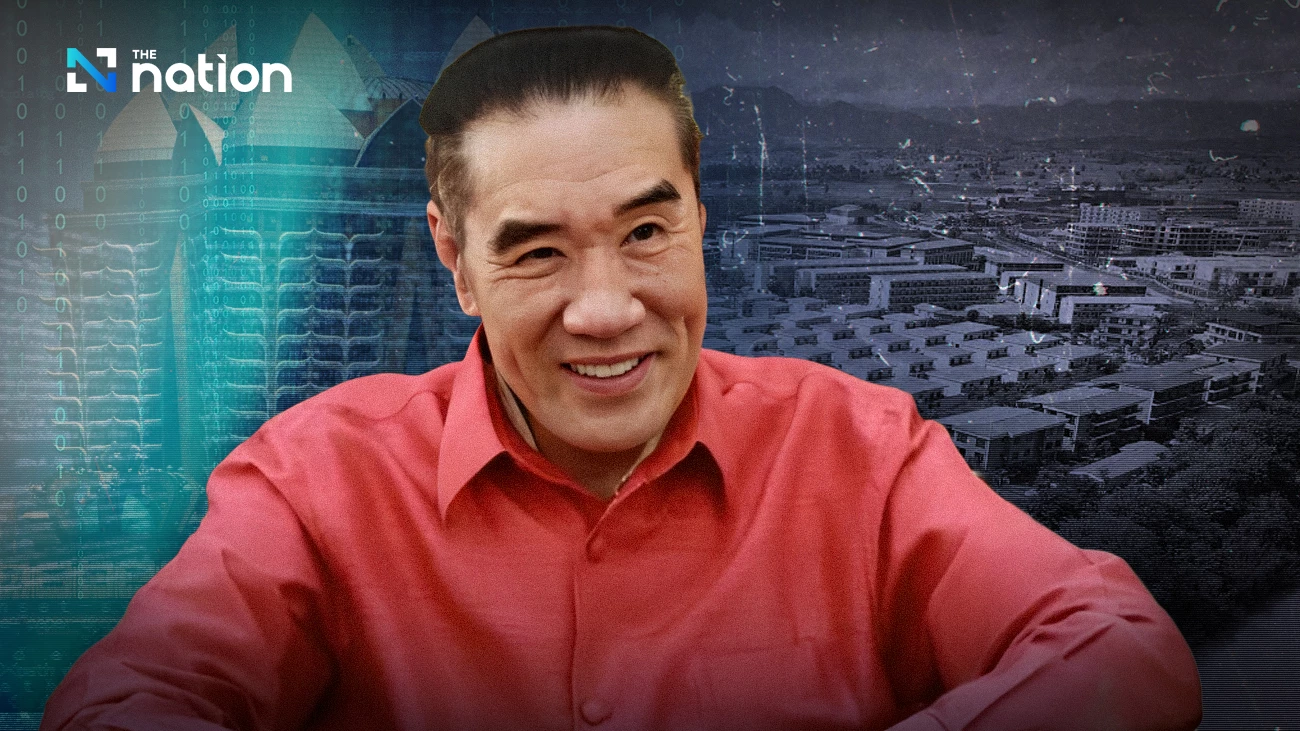
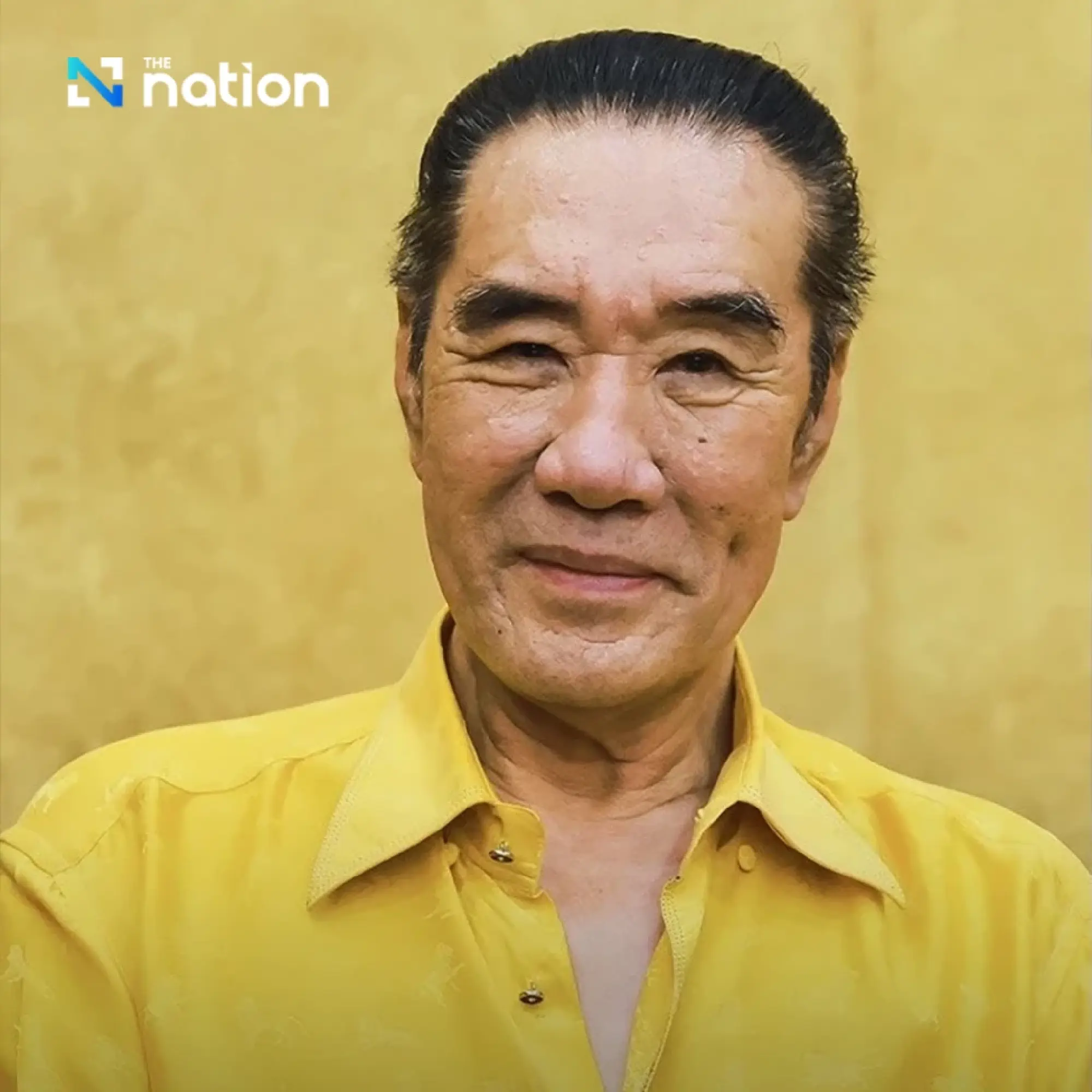
Spotlight on Zhao Wei after KK Park scam crackdown

Monday, October 27th, 2025
Spotlight on Zhao Wei after KK Park scam crackdown

Tension is once again rising along the Thai–Myanmar border following the Myanmar military’s air strikes on KK Park, a notorious scam hub in Myawaddy. Thai residents in Mae Sot district, Tak province, have reported hearing heavy explosions across the Moei River—likened to fireworks set off by the Myanmar Army and the Karen Border Guard Force (BGF).

On 26 October 2025, around 1,243 people of 28 nationalities fled across the Moei River into Thailand as Myanmar troops advanced. Among them were suspected Chinese ringleaders who allegedly slipped through natural crossings in Mae Ramat district, believed to be heading for Kings Romans Casino opposite Chiang Saen, Chiang Rai province.

Although details remain unconfirmed, the mention of Kings Romans inevitably brings to mind Zhao Wei, the chairman of the Golden Triangle Special Economic Zone (GTSEZ) in Bokeo province, Laos.

Spotlight on Zhao Wei after KK Park scam crackdown

A long shadow of suspicion

In late 2022, Thai whistleblower Chuwit Kamolvisit accused Zhao Wei of links to Tu Hao, a key figure in the Chinese “grey” business network, claiming the Dok Ngiew Kham Company—connected to Tu Hao—had invested in KK Park.

Zhao Wei fired back with a fiery press conference denying any investment by Dok Ngiew Kham in KK Park.

Yet Zhao Wei and his Kings Romans empire have long drawn the attention of Western governments.

In 2023, the UK, Canada and the United States jointly announced sanctions on individuals tied to Chinese-funded enclaves near Thailand’s borders—naming Zhao Wei, She Zhijiang, and Saw Chit Tu—citing UN reports linking them to forced labour and human trafficking through online scams.

It was not Zhao Wei’s first brush with sanctions, but he has consistently denied all allegations of trafficking or narcotics involvement.

Spotlight on Zhao Wei after KK Park scam crackdown
The ‘Zhao Wei model’

Beijing began cracking down on cross-border call-centre gangs in 2024, launching the so-called “Zhao Wei model” in coordination with the Lao government to purge telecom-fraud networks within the GTSEZ.

Chinese and Lao police carried out joint raids, after which Laos’s Ministry of Public Security declared early in 2025 that no call-centre gangs remained in the Golden Triangle.

The “Zhao Wei model” contrasts sharply with Myanmar’s lawless “Laukkaing model.” Zhao Wei enjoys official backing from the Lao PDR government and apparent leniency from Beijing, which continues to regard him as a stabilising figure in the region.

Mekong analysts suggest that China’s so-called “grey economy” may serve as an informal geopolitical tool, balancing Western influence while keeping illicit networks under tacit control—ensuring such scam operations never fully disappear.


Zhao Wei’s rise from the Golden Triangle

Over two decades ago, Zhao Wei ran a casino in Mong La, a semi-autonomous Shan State enclave backed by local warlord Sai Leun.

When Yunnan authorities tightened border controls and cracked down on organised crime, Zhao’s casino operations were forced to close.

In 2007, he re-emerged in Laos, securing a 50-year concession to develop the Golden Triangle Special Economic Zone in Ton Pheung district, Bokeo province.

Laotian leaders hailed Zhao Wei as a legitimate investor and visionary developer, turning his enclave into a showcase SEZ for the country.

Zhao Wei developed close ties with Somsavat Lengsavad, the former Lao deputy prime minister of Chinese descent. The two were known to share a personal friendship—Lengsavad’s ancestors had migrated from Wenchang, Hainan, to Luang Prabang during the French colonial era.

During his tenure, Lengsavad personally pushed for the approval of Zhao Wei’s 50-year concession.
 

Beijing’s outpost in the Golden Triangle

Experts note that Zhao Wei’s empire—straddling the frontiers of Myanmar, Laos and Thailand—has become more than a private enterprise.

To many observers, it functions as a strategic outpost of Beijing, keeping watch over US activity in the region and securing China’s foothold in mainland Southeast Asia.

While Western nations see Zhao Wei as a criminal mastermind, others in the Mekong view him as Beijing’s pragmatic operator—the man who turned a no-man’s-land of casinos and trafficking routes into a tool of Chinese influence.